 |
|


 Capabilities


|
|


|
Chairman statement
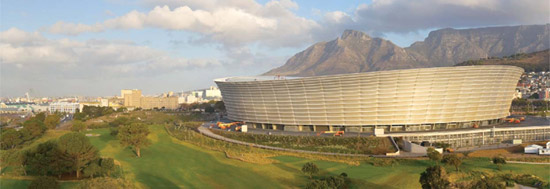
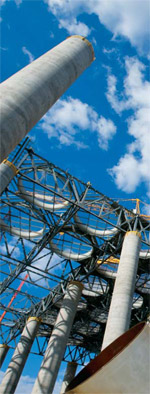
DEAR SHAREHOLDER, Murray & Roberts is the leading engineering contractor for the largest and most complex projects in the South African Government’s infrastructure investment program to build new power generation capacity and upgrade road, rail and pipeline infrastructure. The completion of Green Point Stadium and the first phase of Gautrain from Sandton Station to OR Tambo International Airport in time for the 2010 FIFA World Cup – and ahead of our contractual obligations – represent significant accomplishments of engineering, construction and project management. Many of our businesses play a leading role in other major infrastructural projects in the South African market, such as Eskom’s Medupi and Kusile power stations, the Gauteng Freeway Improvement Program and Transnet’s National Multi-Product Pipeline to transport fuel from Durban to Johannesburg. We have also undertaken major projects offshore, such as the Dubai International Airport Concourse 2.
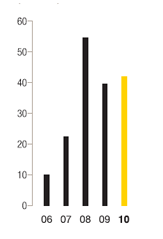
However, our Group’s achievements on these projects have to a certain degree been overshadowed by difficulties we have encountered in the largest of them and we have had to recognise that the size and complexity of major projects introduce significant new challenges to our business. The Gautrain project has encountered disruption and severe delays due primarily to the late procurement and delivery of land. This, combined with the significant acceleration required for the early completion of phase 1 of the project, resulted in an increase in working capital which had a financial impact on our Group during the year. Different challenges encountered on the Medupi project, associated largely with design changes, have delayed our work on both the civil engineering contract and the structural fabrication and erection of boilers. These challenges have been compounded by the difficulty we have faced securing payments in an economic downturn from a major client in Dubai. Our financial results for the year to 30 June 2010 reflect the impact of these challenges on our business and the aftermath of the global economic downturn. Revenue and operating profits declined by 2% and 36% respectively, while diluted headline earnings per share declined by 50% to 340 cents. However, a number of our businesses performed exceptionally well in difficult market conditions. Clough achieved solid financial growth for a third consecutive year and the results of the Construction Products SADC cluster were strengthened by excellent performances from Hall Longmore and Much Asphalt. Although the operating margin was impacted, it is encouraging to note that at 5,6% it remains within our strategic framework of 5,0% to 7,5%. The order book stabilised at R42 billion at 30 June 2010 – representing 176% of project revenue which exceeds global best practice – and the statement of financial position remains healthy. I am pleased to report that the Board has declared a total dividend of 105 cents for the full year
Safety The Board has noted with great concern the deaths of nine employees, Joseph Tankiso Koenyana, Bhekizenzo Moses Khumalo, Lephoto Abel Motloung, Tankiso Sidwell Hlalele, Shofiqul Azahar Ali, Soma Swamy Reddy Rajam, Gabangane William Masilela, Dawid Johannes Jacobus Burger and Clementi Rakeiti Lelimo, at work sites in South Africa and the Middle East during the year under review. Subsequent to the year end, a fall of ground incident at the Aquarius Marikana Mine on 6 July claimed the lives of five employees, Ntobeko Siguca, Otladisang Petrus Kai, Tsielo Toko, Tshepo Jacob Motjotji and Zwelebango Manjawe. Two further fatalities occurred on 13 August at the Aquarius Kroondal Mine and on 17 August at Park Station, where Vasco Manuel Macamo and Lamulani Moyo respectively sustained fatal injuries. We express our condolences to the families of the deceased. The Board has commissioned an independent review of the Group’s safety policies, procedures and practices. Pending the outcome of the review, the Group will continue to implement measures such as the STOP.THINK campaign to make our operations safer and, to the fullest extent possible, injury-free. In another important development in this regard, a senior safety executive was appointed in May 2010 to support the Group’s leadership in their efforts to strengthen health and safety standards and practices. The group consolidated lost time injury frequency rate (LTIFR) of 2,20 (2009: 2,87) has maintained the trend of improvement that we have experienced in recent years and it demonstrates the strong commitment of all of our businesses to a safe working environment. Nevertheless, it also indicates that much work is still required for the achievement of our group target of zero fatalities and permanent disablement and a LTIFR below 1,0. Africa, in particular, offers the prospect of significant growth in our targeted mining, oil & gas and construction sectors and we are exploring opportunities to strengthen our presence in the SADC region and expand beyond SADC.
Business environment The global economy recovered strongly during the past year in response to stimulatory fiscal and monetary policies, and a rebound in inventory and commodity prices boosted sectors such as manufacturing. However, the global economy has shown recent signs of softening as the stimulatory forces have run their course and evidence of sustainable growth in private effective demand remains limited. Countries that experienced more robust recoveries, such as China, are tightening control to prevent over-heating of their economies and economists are forecasting a slow recovery in the year ahead which is likely to support the current level of commodity prices. South African manufacturing and mining sectors responded positively to the global recovery and the domestic economy started to move out of recession in the third quarter of calendar 2009. However, growth in private sector investment slowed sharply and is unlikely to revive until companies are confident of a sustained improvement in the business environment. Capital spending by the public sector has also tapered off following the completion of Soccer World Cup-related projects, and future growth in this area is likely to be constrained as Government pauses to digest the consequences of the recent high levels of capital expenditure. These declines in private and public sector investment are partially accountable for the delayed impact of the recession on our business. The opening up of African markets offers new opportunities to South African companies that could compensate for weaker domestic growth. Although the euphoria of a so-called super cycle in commodities has dissipated, the shift in global growth trends from developed to developing and emerging markets still offers the prospect of further commodity and infrastructure-related development. Strategic positioning Murray & Roberts has undergone significant growth in recent years. Our strategy to maintain future growth in challenging and rapidly changing domestic and global environments prioritises organic growth and acquisitions required to build the scale and capacity necessary to remain competitive and maintain future growth in our targeted sectoral and geographic markets. Africa, in particular, offers the prospect of significant growth in our targeted mining, oil & gas and construction sectors and we are exploring opportunities to strengthen our presence in the SADC region and expand beyond SADC. Sustainability Murray & Roberts is committed to growing its business and adding value in a responsible and sustainable manner. We recognise that we have a duty to create value for our current shareholders and a sustainable future for generations to come. In response to the King Code of Governance Principles for South Africa 2009 (King III), we are preparing for our first integrated report in 2011 and our expanded 2010 sustainability report is written in accordance with the Global Reporting Initiative G3 Sustainability Reporting Guidelines and King III. To improve our sustainability reporting and ensure comparability year-on-year, the Group will commission independent assurance of the 2011 sustainability report. Human capital Murray & Roberts considers its people and leadership teams as a critical source of competitive advantage. The continuous development of our human capital resource – from our workforce to our executive leaders – is central to our business strategy, ensuring that we have the stability, capacity and ethical steadfastness required to meet the demands of our business environment. We continue to invest significantly in the development of our employees at all levels, providing a range of training, learning and career development opportunities for our people. We place a high level of emphasis on developing skilled artisans and supervisors – and this has been particularly important during our current phase of involvement in major projects. We invest much time and effort in building our talent and have a leadership succession and development process which aims to ensure that we have the talent required to meet our strategic objectives. In addition to our Leadership Pipeline process, the Board has recently initiated a project with external consultants to assist in the identification and development of leadership talent at the junior, middle and senior levels of management. In 2010, the investment in formal training and development across the Group amounted to R117 million (2009: R96 million), including wages and salaries of participants and capital expenditure in upgrading training facilities. We continue to invest in an Artisan Training Centre at Lephalale FET College, where 720 artisans will be trained for the Medupi power station. Furthermore, the Group funded 167 bursars at South African tertiary institutions and approximately 10 000 employees undertook formal skills enhancement and training development during the year. In 2010, the investment in formal training and development across the Group amounted to R117 million (2009: R96 million). Black economic empowerment Murray & Roberts believes that broad-based black economic empowerment is essential for the long term economic and social stability of South Africa and the development of the construction, mining and engineering sectors. We achieve important new milestones every year in the implementation of a comprehensive strategy to address the full range of empowerment requirements across our diverse range of operations serving the domestic construction economy. During the past year, an independent review of the Group’s empowerment status concluded that our broad-based black economic empowerment rating improved to level four (2009: level five) and we registered 31,3% broadbased black ownership based on dti Codes of Good Practice. The Letsema broad-based black economic empowerment (BBBEE) scheme has created wealth of more than R985 million for an estimated 20 000 employees and community participants and total dividends of R157 million have been paid to the trusts to date. In 2010, we contributed R74,9 million to enterprise development and R44,2 million to socio-economic development through our corporate social investment program and from the dividend gains of the Letsema BBBEE community trust. Furthermore, R21,7 million in education bursaries for employees’ family members has to date been allocated by the Letsema BBBEE employee benefits trust to 124 bursars at secondary and tertiary schools. At leadership level the composition of the Board and senior management will increasingly reflect the transformation of South African society. Currently, six directors are black, three of them women. Two of our managing directors are black men and one is a woman, and we have two black operational chairmen.
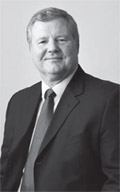
Community development Murray & Roberts recognises that its business activities have an impact on the communities in which they are undertaken. The Group is committed to managing this impact responsibly and accepts that it has an obligation that extends beyond statutory requirements to the upliftment of society as a whole. The Murray & Roberts corporate social investment program invested R22,2 million (2009: R21,1 million) in development projects aligned with the Group’s business strategy, supporting mathematics, science and technology education, numeracy and literacy education in early childhood development, and environmental education. Murray & Roberts supports sustainable social development through many of its community initiatives. A number of employees participate in community development as champions of projects the Group supports. The Murray & Roberts corporate social investment program invested R22,2 million (2009: R21,1 million) in development projects aligned with the Group’s business strategy. Risk management A critical element of our future sustainability is our ability to manage risk. The Board promotes the rational engagement of risk in return for commensurate reward and is responsible for ensuring that risk management, including related systems of internal control, are formalised throughout the Group. These systems of risk management, internal control and internal auditing aim to promote the efficient management of operations, protection of the Group’s assets, legislative compliance, business continuity, reliable reporting and the interests of all stakeholders. Corporate governance The Board is committed to and fully endorses the principles of the Code of Corporate Practices and Conduct (Code) as set out in the King Report on Corporate Governance for South Africa 2002 (King II). The Board is satisfied that the main principles of the Code have been implemented and is of the opinion that Murray & Roberts complies with the Listings Requirements of the JSE Limited (JSE). The JSE has made a number of amendments to the Listings Requirements. All changes relating to King III must be complied with in respect of financial years commencing on or after 1 March 2010. The Board is committed to the highest standards of corporate governance and has already begun taking steps to implement King III. External appraisals of the effectiveness of the Board, its committees and individual directors were conducted during the year. The appraisals were benchmarked against the strategic requirements of Murray & Roberts and the need to ensure the capacity to deliver these requirements and strengthen the diversity and sector expertise of directors. Committee self assessments were also performed during the year under review. The appraisals were positive and their recommendations are being followed through for implementation. Internal appraisals will be conducted next year. An internal appraisal of the chairman was led by the chairman of the remuneration & human resources committee and discussed by the Board. The appraisal was positive. King III recommends that the independence of non-executive directors be assessed by the Board on an annual basis. The Board, assisted by the nomination committee, conducted an assessment of the independence of its non-executive directors. All non-executive directors meet the criteria set out in King III for determining their independence in fulfilling their duties towards the company. The average length of service of the non-executive directors was less than six years during the year under review. The Board approved the formation of a social & ethics committee with effect from 1 July 2010 in terms of the draft Companies Amendment Bill 2010. The committee met for the first time on 24 August 2010. After a year, the committee’s merits will be reviewed. The Board is committed to the highest standards of corporate governance and has already begun taking steps to implement King III. Board of directors It has been a great pleasure to welcome four new directors to the Board. Malose Chaba was appointed an executive director with effect from 1 September 2009. Malose is an electrical engineer who joined the Group as managing director of Murray & Roberts Engineering Solutions in 2004 and was appointed group chief engineer and chairman of the engineering contracting cluster in 2008. In 2009, he was appointed to his current role as head of group assurance. Trevor Fowler joined the Group and was appointed an executive director with effect from 25 September 2009. He succeeded Keith Smith as executive chairman of the Construction SADC cluster on 1 July 2010 and has assumed responsibility for expanding the Group’s engagement with the rest of Africa. Trevor is a civil engineer and was previously chief operating officer in the South African Presidency. Orrie Fenn was appointed an executive director with effect from 20 November 2009 and assumed executive responsibility for the businesses forming the Construction Products SADC cluster. Orrie was formerly the chief operating officer of PPC and obtained a doctorate in engineering while working at the Chamber of Mines Research Organisation. Subsequent to the year end, Bill Nairn was appointed an independent non-executive director. He is currently an independent non-executive director of AngloGold Ashanti Limited and chairman of its Safety, Health and Sustainable Development Committee. He previously served on the boards of several companies including Anglo American plc, Anglo Platinum Limited and Kumba Resources Limited. Sean Flanagan resigned from the Group and as an executive director with effect from 31 January 2010. Sean joined Murray & Roberts in 1991 and was appointed an executive director in 2004. He held principle executive responsibility for the Gautrain project, Green Point Stadium and the Eskom power program. Imogen Mkhize has indicated that due to other work commitments she will not be available for re-election at the 2010 annual general meeting. Imogen was appointed an independent nonexecutive director in 2005 and has served as a member of the audit and risk management committees. She is a talented and respected member of the South African business community and Murray & Roberts has benefited from her wide-ranging experience. We wish her ongoing success in her career path. Appreciation The past year has placed a great deal of pressure on our business and our people and they have displayed great fortitude and resilience. I would like to express my appreciation for this to the people in all of our operations, from our top executive team, led by Brian Bruce, to our workforce. I am grateful to my fellow board members who have been an island of stability and wise counsel in challenging times. My thanks also go to our clients, our empowerment and commercial partners and our shareholders for their ongoing support. Annual general meeting Shareholders are reminded that the annual general meeting of the company will be held on 27 October 2010. The order of business is set out in the notice of annual general meeting of this report. Prospects The Group expects that growth is probable in the year ahead, coming off the low base caused by the Gautrain charge to the statement of financial performance. However, the level of this growth will depend on order book development and general economic activity, particularly in South Africa, settlement of major project final accounts, reduction of working capital including through the closure or disposal of underperforming assets, and progress with the Eskom power program. The Group expects that growth is probable in the year ahead, coming off the low base caused by the Gautrain charge to the statement of financial performance. A business update will be presented at the Group’s annual general meeting. The financial information on which this prospects statement is based has not been audited or reviewed by the Group’s auditors. Roy Andersen
|
|||||||||||||||||||||||||||||||||||||||||||||||||||||||||||||||||||||||||||||||||||



© 2010 Murray & Roberts - All rights reserved. |