 |
|


 Capabilities


|
|


|
Transformation & local economic developmentDiversity and employment equity Murray & Roberts embraces diversity and is committed to transformation, non-discrimination and freedom of association. The Group’s employment equity approach provides for equal opportunity and fair treatment in employment. While this enables compliance with South African employment equity legislation, the Group emphasises diversity to maximise its talent pool, strengthen capacity and increase innovation by introducing different ways of thinking. Murray & Roberts has in recent years attracted a number of historically disadvantaged employees and executives who see in the company a long term career rather than a short term opportunity. Skills shortage and the impact of increased transformation pressure have created challenges to the retention of experienced black executives, engineers and other built environment professionals. The Group’s main board composition reflects the transformation of South African society. Six directors are black, three of whom are women. 83% of South African-based employees are black, while 14% are female. Approximately 44% (2009: 48%) of all levels designated as management in the domestic market are black, and 11% (2009: 10%) female. Each of the Group’s South African business operations compiles employment equity plans and reports for the Department of Labour. Employment equity forums representing employees, contribute to the pursuit of employment equity targets and objectives. Analysis of the Group’s employment equity profile indicates that more work is required if the Group is to make greater progress in achieving its long term targets. An holistic approach aimed at both supply side initiatives (growing the pool, diversifying the source and attracting better than the competition) and demand side activities (retention plans, accelerated development and reconsidering job designs) is utilised across the Group to ensure that it attracts, develops and retains the talent it requires to meet its transformation and growth objectives. Non-South African operating companies are required to achieve a diverse representation of the people within their geographic location and comply with the relevant legislation in the country in which they operate. Consolidated summary of the Murray & Roberts employment equity profile in South Africa – 30 June 2010
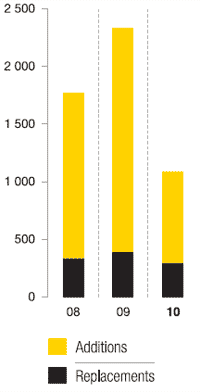
Broad-based black economic empowerment Murray & Roberts follows the provisions of the Broad-Based Black Economic Empowerment Act 53 of 2003 and the principles embodied in the Codes of Good Practice on BBBEE, by instituting a policy for the upliftment of the historically disadvantaged in South Africa. The group achieved an enhanced BBBEE rating of level 4 (2009: level 5) through an independent verification process. A review of the Group’s current empowerment criteria was conducted during the year and confirmed that the Group’s empowerment status is compliant with various industry charters and current legislation. The key areas for improvement are targeted procurement, skills development and employment equity. BBBEE remains a priority challenge for the Group. There is much to be done to ensure we meet our expectations as well as maintain our commitment to meritocracy as the basis for appointment and reward. Additional information on our black economic empowerment strategy and practices is available on page 12 of the annual report. The Letsema BBBEE shareholding offers previously disadvantaged employees their families and some of the communities in which Murray & Roberts operates a stake in the company and its future. Since Letsema was launched in 2005, wealth of more than R985 million has been created for participants and total dividends of R157 million have been paid to the trusts. Local economic development Murray & Roberts is committed to the principle of supporting local economic development in the economies within which it operates with the aim of supporting government and client localisation strategies. Murray & Roberts has made a significant investment in its plant and equipment over the past three years with a cumulative capital expenditure of R5,2 billion. R4,2 billion has contributed to the expansion of our productive base.
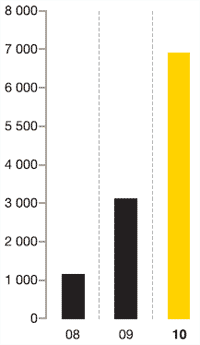
Murray & Roberts also significantly increased its procurement from small and micro enterprises, more than 50% black owned businesses and black women owned business, as depicted below.
The improvements are partly attributable to better recording of preferential procurement but primarily to the commitment by Murray & Roberts to support local empowered suppliers. In line with the Codes of Good Practice on BBBEE targets for preferential procurement, the Group aims to achieve 50% BBBEE procurement expenditure from all suppliers based on the BBBEE procurement recognition levels as a percentage of total measured procurement expenditure by 2012. The Group’s preferential procurement policy requires each operating entity to verify its suppliers and alternatively to source empowered suppliers, should the existing suppliers not be appropriately empowered.
|
|||||||||||||||||||||||||||||||||||||||||||||||||||||||||||||||||||||||||||||||||||||||||||||||||||||||||||||||||||||||||||||||||||||||||||||||||||||||||||||||||||||||||||||||||||||||||||||||||||||||||||||||||||||||||||||||||||||||||||||||||||||||||||||||||||||||||||||||||||||||||||||||||||||||||||||||||||||||||||||||||||||||||||||||||||||||||||||||||||||||||||||||||||||||||||||||||||||||||||||||||||||||||||||||||||||||||||||||||||||||||||||||||||||||||||||||||||||||||||||||||||||||||||||||||||||||||||||||||||||||||||||||||||||||||||||||||||||||||||||||||||||||||||||||||||||||||||||||||||||||||||||||||||||||||||||||||||||||||||||||||||||||||||||||||||||||||||||||||||||||||||||||||||||||||||||||||||||||||||||||||||||||||||||||||||||||||||||||||||||||||||||||||||||||||||||||||||||||||||||||||||||||||||||||||||||||||||||||||||||||||||||||||||||||||||||||||||||||||||||||||||||||||||||||||||||||||||||||||||||||||||||||||||||||||||||||||||||||

© 2010 Murray & Roberts - All rights reserved. |