 |
|


 Capabilities


|
|


|
SocialHealth & safety Providing a safe and healthy work environment for employees, contractors and other stakeholders remains one of our key focus areas. We have set a challenging goal of achieving zero harm across all of our operating entities. Murray & Roberts seeks to create a mindset and an environment where people believe it is possible to work injury free, regardless of where they are in the world, what role they undertake, or in which operation they work. Although significant progress has been made in understanding health and safety risks associated with our environment and implementing mitigating measures, our performance is still far from our aspiration. Safety performance Regrettably, the Group recorded nine (2009: nine) fatal accidents during the financial year, seven from South African operations and two from Middle East operations. It is also regrettable that the new financial year started on a sad note following the death of six Murray & Roberts employees and one contractor employee in three separate incidents. The first incident occurred on 6 July 2010 where five employees lost their lives in a massive fall of ground (FOG) incident at Aquarius Marikana shaft number 4. The second incident was on 13 August 2010 where an employee sustained fatal injuries after he was caught between two load haul dumpers (LHDs) at Aquarius Kopaneng shaft. The third incident occurred on 17 August 2010 at Park Station on the Gautrain project, when a contractor employee fell approximately seven metres and sustained fatal injuries.
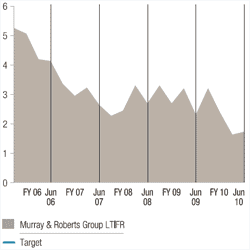
Four (2009: three) of the fatalities during the financial year occurred in underground mining operations in South Africa and five (2008: five) were recorded in the construction operations. We are deeply disappointed by the occurrence of fatalities despite our relentless effort to improve health and safety. Comprehensive investigations were conducted to determine root causes and corrective measures implemented to prevent re-occurrence. The group consolidated lost time injury frequency rate (LTIFR), measured over a million man hours, improved to 2,20, a 23% improvement from the 2009 performance. Our target over the next two years is to reduce the LTIFR by 33% per annum in order to achieve our objective of less than 1,0. The graph opposite illustrates the Group’s historic performance against target. Safe workplaces – our approach We believe that management is ultimately responsible for providing a safe and healthy workplace. However, this cannot be achieved without the participation of highly motivated employees and other stakeholders. As a result, appropriate strategies, structures and resources are continuously implemented to make this partnership possible. In line with sound corporate governance principles, a health, safety & environment (HSE) committee reviews operational performance in safety, health and environment and provides strategic guidance to improve performance. Below this structure are various health and safety management committees whose purpose is to review and advance the health and safety program with the involvement of all relevant stakeholders.
The Group has appointed DuPont Sustainable Solutions, a global leader in health and safety management, to undertake a comprehensive evaluation of the Group’s South African operations against best practice standards. Murray & Roberts wants to achieve sustained excellence in safety performance and in order to do this the Group recognises that a safety culture change is necessary, which focuses on the safe behaviour and actions of people and key process safety management elements. To begin the change process a better understanding of the current state is necessary, where the process will identify strengths and opportunities from which to build sustainable improvement. A comprehensive set of continuous improvement recommendations will be developed and implemented across the Group. We recognise that this is not a quick fix solution but rather a sustained journey to zero harm.
Responding to safety challenges Further enhancements were made in our approach to managing safety by developing and implementing a model that clearly articulates the roles, responsibility and accountability of corporate office versus the operations. Our approach to safety is incorporated in our charter, which states that we value health, safety and the environment by integrating sound health, safety and environmental management into all activities to achieve zero harm. The group health and safety framework seeks to implement a continuous improve ment risk-based approach to better understand and treat the exposures facing Murray & Strong safety leadership is essential in our journey to achieve zero harm, as is the participation of highly motivated employees Roberts. The framework serves to guide operational health and safety management, policies, standards and procedures. The group HSE policy outlines Murray & Roberts’ aspiration of zero harm to the health and safety of its employees, subcontractors and suppliers, visitors and others under its managerial control. This aspiration is reflected in our group wide targets of:
Leadership and line accountability Strong safety leadership is essential in our journey to achieve zero harm. The Murray & Roberts leadership succession and development model provides guidelines on the characteristics required of a Murray & Roberts leader. Managers at all levels, from executive to frontline management, are accountable for health and safety. They are expected to lead by example and demonstrate a visible commitment to health and safety. In order to improve the competency of all managers, Murray & Roberts will introduce health and safety leadership interventions that include:
While every initiative taken seeks to positively impact the behaviour of both employees and leaders in our organisation, we have also sought further guidance from experts to advance our knowledge and skills on this subject. DuPont Sustainable Solutions, one of the leading companies on behaviour based safety, was appointed to facilitate a senior leadership safety summit on the executive role in safety management, including:
Implementation of critical safety standards Elimination of work related fatalities is the first priority in our journey to zero harm. Information from risk assessments and incident investigations indicates a few activities that are associated with the majority of our fatal and serious incidents. A response strategy focusing on measures to address these risks has been formulated and will be implemented across the Group during the new financial year. Fatal risk control protocols (FRCPs), will be implemented to address risks associated with the following activities:
A plan to train employees on the requirements of the FRCPs, implementation of the requirements on the shop floor and vigorous auditing to track progress will be rolled out during the next financial year. The aim is to achieve sustainable compliance over a reasonably short period of time. Progress on implementation will be closely monitored at the highest level within the organisation. Safety indicators Murray & Roberts currently utilises a set of lag indicators to measure overall safety effectiveness and performance – some of our operations have made significant advances in this process of measurement and now include leading indicators to track health and safety performance. During the past year we reviewed our key indicators and aligned them with best practices. From 1 July 2010, the Group will track the following lag indicators:
These measurements will assist in comparing our performance with that of our clients and other players in the industry. The use of leading health and safety indicators has been identified as one of the key focus areas in our effort to achieve a proactive health and safety culture. We have identified leading indicators that will be monitored at group level. Examples include:
More leading indicators will be implemented at operational level and we plan to learn from their experiences and include more at group level. In order to effectively manage a mix of leading and lagging indicators, a more sophisticated reporting system will be deployed across the Group which will also lead to greater consistency in reporting across the operating entities. Communication and safety awareness The Murray & Roberts STOP.THINK campaign focuses on raising health and safety awareness across all Murray & Roberts sites. The Group has developed an extensive collection of collateral that is used on work sites, including:
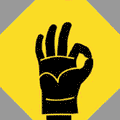
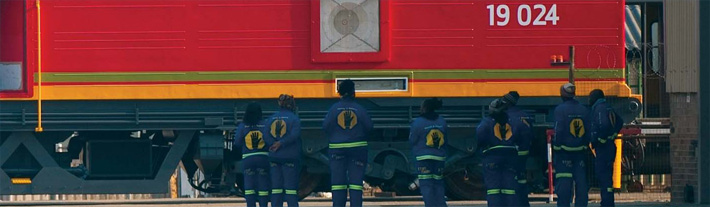
Hand signals allow workers to communicate vital safety messages to each other in noisy environments, over vast distances and at differing heights.
During the year, a series of STOP.THINK Moments videos were developed to re-enact serious incidents and highlight the behavioural contributors to the incident. STOP.THINK Moment videos use actors to recreate actual incidents (fatal and disabling) that occurred on Murray & Roberts sites and projects. Where possible, family members, friends and colleagues are interviewed to add a touch of reality to each video. An extension of our STOP.THINK brand is the Impilo Yethu print medium comic strip communication platform. Impilo Yethu was originally created with a predominant focus on safety related issues at work, but has since broadened its mandate to safety at home, protecting the environment, lifestyle choices and general health. Impilo Yethu is used in the mornings in toolbox talks to brief and educate employees on site.
SMS is another key medium of communication, used to establish membership of an Impilo Yethu club and communicate HSE messages. The Group has created a database of more than 10 000 mobile telephone numbers from club membership and previous entries into Impilo Yethu competitions. Early morning SMS messages to employees reinforce core messages such as “Don’t forget to STOP.THINK today!” or “Don’t forget to hook up today!” The STOP.THINK initiative provides a strong foundation for communicating current and future improvement initiatives across the Group. Hazard identification and control A variety of workplace interactions, observations and audits are to be implemented to encourage all employees to STOP.THINK and act safely. We have, however, identified that employees often fail to identify hazards before commencing their tasks. To address this challenge we will implement a training program to develop employees’ skills in hazard identification and control. The program will go beyond hazard identification and include training to enhance skills in conducting safety observation/interactions amongst employees. Safety observation is a process where employees observe one another to identify good practices, as well as unintentional at-risk behaviours. The greatest benefit of safety observations is the discussion that takes place following the observation, where employees reinforce the safe activities and identify better ways of controlling the associated hazards. Where we experience lost time, disabling or fatal incidents, we require operations to conduct thorough investigations to determine the root causes and prevent re-occurrence. A need was identified to train managers and health and safety professionals in conducting good quality investigations. 86 employees were trained on the TapRoot process, an internationally recognised incident investigation process. More training sessions are scheduled for the early part of 2011. A process has been put in place to facilitate sharing of lessons learned from incidents across the organisations. Operations are expected to use this information to conduct gap analysis in their areas and close the loop to prevent the repeat of similar incidents. Contractor safety Murray & Roberts makes extensive use of contractor companies in some of its activities and they are a key contributor to our health and safety statistics. Programs aligned with the new construction regulations have been implemented to ensure that contractors comply with legal requirements and Murray & Roberts standards. More time will be spent on ensuring a consistent and proactive approach towards management of contractors across the Group. Operational performance review In addition to lagging and leading indicators the focus of the health and safety program will be on evaluating the effectiveness of operational plans. The internal and external audit program will place specific emphasis on the implementation of critical health and safety standards and legal requirements. Occupational and societal health Identifying and controlling undesirable impacts that our operations may have on the health and wellbeing of employees, contractors and other stakeholders is central to our sustainability strategy. We implement medical surveillance and industrial hygiene programs to ensure successful identification and management of potential health risks and implementation of remedial strategies. Hearing loss is a major occupational health risk in our operations. 103 (2009: 65) new noise induced hearing loss cases were recorded in the year. The Group has engaged specialised service providers to assist with mitigation measures which include engineering controls to eliminate or reduce impact to acceptable levels or use of personal protective equipment (PPE) where the risk cannot be completely eliminated. Employees receive regular training in the potential health impacts in the workplace and protective measures. Sub-Saharan Africa remains the region most heavily affected by HIV worldwide, accounting for over two thirds (67%) of all people living with HIV and nearly three quarters (72%) of AIDS-related deaths in 2008. The nine countries in southern Africa continue to bear a disproportionate share of the global AIDS burden, each with an adult HIV prevalence greater than 10%. Murray & Roberts operates in and employs migrant workers from several of these countries. With an adult HIV prevalence of 26% in 2007, Swaziland has the most severe level of infection in the world; Lesotho’s epidemic seems to have stabilised, with a prevalence of about 23% in 2008; Botswana has a prevalence of 25% and South Africa continues to be home to the world’s largest population of people (an estimated 5,7 million) living with HIV. The prevalence rate amongst adults aged 15 to 49 is estimated to be about 17%. It is estimated that the prevalence rate within Murray & Roberts employees is in line with these levels. This poses several risks for Murray & Roberts’ southern African operations including:
The majority of operations have installed extensive societal health programs, including random substance abuse tests and voluntary HIV/AIDS tests. The Group’s risk-based HIV/ AIDS policy promotes voluntary testing, non-discrimination and awareness about preventing the spread of the disease and mitigating its effects. This is aimed at a further reduction in the incidence of societal health problems. A major societal health problem is drug and alcohol abuse. Of the 7 012 drug tests conducted, 3,0% (2009: 3,9%) returned positive. Of the 271 460 alcohol tests conducted, 0,2% (2009: 5,6%) returned positive. These employees receive counseling on the negative effects of substance abuse. The major health risks identified for each operating environment are:
Preventative and corrective mitigation measures are being implemented to eliminate the underlying causes and hazards of all health risks. Training and the use of PPE contribute to a reduction in the impact of health risks. The Group employee wellness program (EWP) is committed to creating a caring and supportive working environment that is people-centred and people-driven. The Murray & Roberts EWP is designed to assist employees experiencing personal and/or work-related difficulties and to ensure optimal performance by employees. In the six months to June 2010, 1 701 EWP safety risk assessment cases were reported. This is a significant increase when compared to the previous year, where 596 cases were reported. The increase is due to the increased marketing initiatives in a number of divisions, implementation of several onsite clinics, introduction of more effective marketing material, an increase in the number of ICAS client representatives, a better appreciation in our operations of the benefits of a comprehensive EWP program and the introduction of the ICAS safety risk assessment service.
Although not represented in the top five problems, a number of traumatic safety events occurred during the period and our EWP service provider provided on-site trauma counseling for 63 employees during 2010. 44 employees were counseled at Murray & Roberts Cementation in June 2010 following two fatal incidents. Murray & Roberts undertook a safety risk assessment as part of its EWP service in several of its operations. These assessments provide an in-depth understanding of the risks that could, if left untreated, result in workplace injuries and lost time. Once assessed, employees are either deemed fit to work in safety critical positions or fit / unfit subject to appropriate interventions. 928 assessments were conducted in 2010. The key risks identified were alcohol abuse, stress and depression. Our EWP service provider has worked closely with the relevant operations to refer employees to the necessary support services in order to assist in reducing the associated risk.
|





 Organisational issues (work relationships
and working conditions) are the more
frequently presented problems and personal
relationships and money management are
other key issues addressed. Our operations
and EWP service provider address these
issues through various means, including
education and referral to necessary support
services.
Organisational issues (work relationships
and working conditions) are the more
frequently presented problems and personal
relationships and money management are
other key issues addressed. Our operations
and EWP service provider address these
issues through various means, including
education and referral to necessary support
services.© 2010 Murray & Roberts - All rights reserved. |