 |
|


 Capabilities


|
|


|
Group chief executive report
A TURBULENT END TO A DECADE OF GREAT CHANGE In finalising our statement of financial performance for the past year, the Group has given careful consideration to all factors influencing its current and future performance prospects. This includes our treatment of and response to a number of challenges associated with our major projects and ongoing volatility in some of our markets. Murray & Roberts ends this first decade of the 21st Century significantly different and in better condition than through the 1990s, perhaps in its 108 year history to date. However, it is stormy economic times in the world and the Group has been impacted by a variety of difficulties associated with a number of significant projects. Elsewhere, larger natural forces have wrought havoc in various parts of the world. Earlier this year the earthquake in Haiti claimed an estimated death toll of at least a quarter of a million lives. More recently in Pakistan, tens of millions of people were rendered homeless and destitute following the worst floods in recorded history while in Russia, the highest ever recorded temperatures have led to environmental disaster and severe human suffering. In Africa it seems, the plight of millions of destitute people lies at the hand of its leadership. The true essence of leadership is to venture further than before, where risk identification and mitigation become an extension of current knowledge. Human fallibility then becomes the weak link in the best laid of plans. No event encapsulates the interface risk between human technology and the forces of nature more than Deepwater Horizon in the Gulf of Mexico. In Chile, the lives of 33 miners hang in the balance, trapped about 700 metres underground with only a slim chance of being rescued. Murray & Roberts through its Cementation Group has proposed a plan that may offer their only hope. But the plan requires that existing expertise and equipment must perform beyond current experience. This is the demand of leadership and the risk is high. There is no other option. It is these same factors that have defined our engagement of major projects, be it Gautrain or the power station program in South Africa, the various LNG projects in Australasia, increasingly competitive project activity in the United Arab Emirates or the global spread of underground mining activity. Murray & Roberts leads the way in these and other ventures. The battleground is mostly uneven and the engagement often unfair. There is no place for the meek, the stakes are very high and risk is ever present. Murray & Roberts has grown significantly and continues to develop through its major project engagement. New leaders have emerged from the challenge while others have fallen by the way. Mistakes have been made that might still be expensive, but are accounted for. Significant damages have been suffered which form the basis of claims under the various contracts. Working capital has been invested and must be recovered. Some of this investment may be at risk in these stormy economic times, in which case prudent provision has been made. This is what makes Murray & Roberts South Africa’s leading engineering and construction group. Over the past decade, Murray & Roberts has experienced significant growth.
The scale and duration of major projects secured by the Group over the past few years presents a number of challenges, not least of which is how to account for revenues earned relative to cash received. This is particularly the case on long duration major projects where significant costs might have been incurred, but for which payment is subject to claims resolution over an extended period. A cumulative total of R1,4 billion in uncertified revenues has been conservatively recognised in the Group’s financial accounts to date, up from R1,1 billion at 30 June 2009. The Group recognised a charge of R619 million to the statement of financial performance in the year, following a thorough review of the estimated cost to completion of the infrastructure works for the Gautrain project, including the additional cost of delivering phase 1 in time for the 2010 FIFA World Cup. The statement of financial performance recognises a loss in the Group’s fabrication operations of R86 million, which are the estimated costs of overcoming significant disruption caused by delayed design and change in scope on the mechanical works for the Medupi power station project. These costs form part of a substantial claim. Adjudications of these extremely complex legal and financial claims and variation instructions have yet to be finalised, and may be subject to arbitration and/or negotiation. This could result in a materially higher or lower amount being finally awarded compared to that recognised in the statement of financial position at 30 June 2010. The Transnet locomotive program is progressing to its revised plan with almost two locomotives a week coming off the production line at UCW. FINANCIAL YEAR TO 30 JUNE 2010 Revenue at R32,0 billion is 2,2% down on the previous year for continuing operations, with operating profit down 36% to R1,8 billion at an operating margin of 5,6%, which is within the Group’s strategic range of 5,0% to 7,5%. The R619 million charge in respect of the infrastructure joint venture for the Gautrain project represents the Group’s share of the increase in estimated cost to completion of the project in excess of the position recognised in the previous financial year. Had this charge not been recognised, the operating margin would have been 7,5%. The direct impact of increased working capital funding on both Gautrain and The UCW Partnership has seen a significant increase in net finance cost to R193 million compared to R20 million for the previous financial year. The consequence of these matters is a 50% decline in diluted headline earnings per share to 340 cents compared to 675 cents in the previous year. Shareholder funds increased 11% to R6,2 billion giving an attributable earnings return of 18,6% on average shareholder funds for the year, which is temporarily below the Group’s target return of 20%. A number of factors have influenced performance in the financial year:
Amicable settlement processes are underway on the Dubai International Airport Concourse 2 and other final accounts in Middle East. Final completion of the Gautrain project is due within the 2011 financial year and every effort is being made under leadership of the Group to progress an acceptable contractual outcome. It is expected that the Eskom power program may advance beyond its start-up problems in the first half of the year, offering for the first time the opportunity for uninterrupted progress of the works. The Transnet locomotive program is in full progress and will be substantially delivered by the end of the 2011 financial year. The Group invested R1,1 billion in capital expenditure during the year, which was significantly down on the previous year, ending the year with a solid statement of financial position and cash reserves of about R2,6 billion against various loan arrangements of about R2,2 billion.
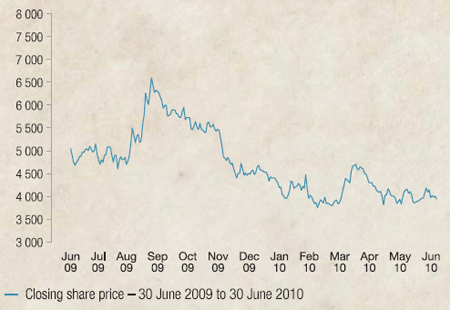
The gravity of the year 2000 decision Rebuilding Murray & Roberts should not be underestimated. The very future of Murray & Roberts was at stake. The authority given to the new leadership team was to make whatever decisions and changes were necessary to take the Group back to its construction and engineering roots and reinstate as a first objective, the January 1996 share price high of 2 850 cents within five years. The chart alongside places some perspective on this year’s performance relative to the past two years, the decade Rebuilding Murray & Roberts and the two decades since 1990. We have clearly created a more robust business and a theoretical reallocation of the current Gautrain provision back over the life of the project to date (the blue line), offers the formula for a sustainable business model for the Group. The share price objective of 2 850 cents was met in March 2006, at a more conservative price to earnings (p:e) ratio of 12 compared to the ratio of 20 in January 1996. Our long term experience suggests a market capitalisation p:e ratio for the construction sector of between 8,0 and 12,0 at a premium of between 1,5 and 3,0 times net asset value. This is on the basis of a sustainable attributable earnings model that should deliver about 5,0% on revenue, which, for Murray & Roberts, is based on a tax rate less than 25%, near zero cost of finance and our strategic operating margin range of 5,0% to 7,5%. The Group’s share traded erratically through the year. It rose from the previous year close of 5 000 cents to a brief high of 6 600 cents in September 2009, with cautious news flow from the annual general meeting and November 2009 trading update causing a decline to its current range of between 3 750 cents and 4 250 cents. The share closed the year at 3 880 cents on a p:e ratio of 11,5 and NAV premium of 1,9 times 2 069 cents, which indicates that valuation upside is possible on good forward prospects.
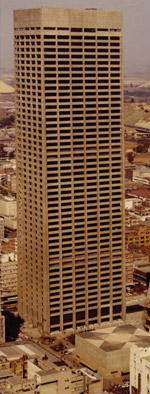
REFLECTING ON OUR FUTURE The Murray & Roberts heritage is rich and eventful, extending back more than a century to before the company was founded in 1902 in Cape Town, embracing the skill, resilience and enterprise of two Scottish immigrants who had met on the boat trip to Cape Town in 1899. This was at the height of the Anglo Boer war and 11 years ahead of the Act of Union that in 1910 brought about a unified South Africa, but crystallised the path to a divided nation. For its first 65 years until 1967, Murray & Roberts comprised its two separate but interconnected constituent companies, Murray & Stewart and Roberts Construction Company, each led by their founding families. During this period the separate enterprises grew in pace with South Africa’s development, extending their reach into numerous international markets. In retrospect, that decade of the sixties most reflects the Group’s recent experience. Fifty years ago on 17 June 1960 Roberts Construction signed a contract in the USA to design and build a nuclear research facility outside Pretoria, which included South Africa’s first nuclear reactor (6,67 MWe). In modern terminology, this was an EPC (engineer, procure and construct) contract with Allis Chalmers subcontracted to provide the nuclear systems and Hall Longmore all piping and tanking. A government requirement to import and localise the systems’ advanced technological capacity saw 90% of all procurement and 100% of all non-nuclear engineering performed in South Africa. The project was a resounding success and was delivered and commissioned within its five year schedule and budget. Murray & Roberts went on to engineer and construct much of the remainder of the Pelindaba facility, including its uranium enrichment capability. That decade was one of significant growth for the sector but ended on a subdued note for the Group following a difficult major project to build the Carlton Tower and Hotel project in downtown Johannesburg. The Carlton was at the time, the largest building project in the world and is still today, the tallest building in Africa. It was a mega project by every definition, with Anglo American as client using an American architect, who simply failed to recognise local conditions and demanded a performance regime that changed the way things were done in South Africa. This was a “coming of age” for Murray & Roberts. Murray & Roberts had been let down at the 11th hour by its own American contracting partner and was forced to draw on the limited resources of its constituent companies in a booming construction economy. The cost was high and Roberts Construction came perilously close to failure. This was averted only as a consequence of the merger that had occurred in 1967 with its sister company Murray & Stewart, to form Murray & Roberts. The following is an edited extract from an in-house MUST Magazine in 1974.
1967 was the year I first joined the Group in Port Elizabeth, initially as a clerk and later as an intern prior to securing my bursary to study civil engineering. I remember the many projects underway across the country and overseas during my years at university and the first decade of my career. THE SOUTH AFRICAN CONSTRUCTION ECONOMY The construction economy lags at both the front and back end of general economic activity, which, depending on the relative critical mass of a particular company, could be anywhere between six and 18 months. Following the intensity of activity required to deliver the necessary infrastructure ahead of the 2010 FIFA World Cup, a significant decline in the sector is now evident, with growth in general economic activity only expected to pick up later in the year ahead. On the other hand, the Group’s international markets have all shown good recovery following the global financial crisis, although competitive levels have increased across the board. In South Africa, the majority of medium to major players in the sector have been fully or partially shielded this past year by the intensity of activity required to deliver the necessary infrastructure ahead of the 2010 FIFA World Cup. However, a significant decline in the sector is now evident in South Africa, with growth in general economic activity only expected to pick up later in the year ahead. South African gross fixed capital formation (GFCF) is expected to reach 25% of gross domestic product (GDP) for the first time in 35 years (since 1975). This is a function of the impact of the final investment in the 2010 FIFA World Cup against the backdrop of a severe decline in South African GDP as a consequence of the global financial crisis. The South African government has shown consistent commitment to a long term program of capital spend, encompassing all aspects of socio-economic infrastructure investment. Despite a sovereign cash flow challenge brought on by the severe impact on the South African economy of the global financial crisis, Treasury has indicated it will increase borrowings to fund the program. This presents a new opportunity for private sector investment and involvement in both the implementation and operations of new and existing public infrastructure and facilities. ENTERPRISE CAPABILITY If you cannot change the people, change the people! This is the hardest mantra on which to deliver, but one that every executive leader will admit is of utmost importance. The change (or transformation) we require of our people must be clear, so as to determine whether we have the correct people. My experience over 40 years in Murray & Roberts and the construction industry, and through the past 10 years as group chief executive, is that individual passion and belief are key leadership and performance differentiators. Over the past decade, Murray & Roberts has experienced significant growth:
The appointment of Andrew Skudder to the role of enterprise capability director two years ago was designed to enhance our focus on and coordination of solutions for the unique demands and challenges we face as a South African based global business. These include:
As we close out this first decade of the 21st century, the Group has expanded its brand and operations globally, with projects covering all four corners of the earth. While wholly focused on selected aspects of the construction economy, Murray & Roberts is now a diverse organisation operating in a federal structure, with a strong corporate office that leads the Group through strategic interventions on matters of universal importance.
Leadership development and succession The combination of growth in size and global scale of Murray & Roberts has demanded a significant upgrade in executive and leadership capacity across the Group. As a first principle, we have adopted the Leadership Pipeline model as our basis of talent management. We have learned that in most instances, specific experience trumps general management as the preferred appointment criteria for operations leadership. However, if the former is not available, which is often the case in South Africa, a general management appointment must possess specialist skills and intellectual capacity that overcome the experience shortfall. While new executive capacity has been recruited into all levels of the Group on a regular basis over the past ten years, internal transfers and appointments are always prioritised. The combination of growth in size and global scale of Murray & Roberts has demanded a significant upgrade in executive and leadership capacity across the Group. As a first principle, we have adopted the Leadership Pipeline model as our basis of talent management. Employment equity The appointment of employment equity candidates is prioritised in general, although we have experienced only limited success to date finding sufficient experience in candidates for senior executive positions. There is a dearth of deep experience in the industrial and mining sector in general, which is only now in the early stages of resolution through increased output from our university and college bursary and graduate development programs. Murray & Roberts prioritises internal appointment, with recruitment from the South African market as its back-up option. Only in special circumstances will an appointment be made from outside of South Africa, other than for the career development of key executives from our international operations. Broad-based black economic empowerment Murray & Roberts values its South African and entrepreneurial heritage and has set a clear ambition to remain an independent business, listed on the JSE Limited, with the majority of its activities in Southern Africa under the leadership and direction of executive management and its Board. It is this philosophy that crystallised the groundbreaking Letsema empowerment strategy that saw the Group acquire 10% of its shares from the market in 2006 and distribute them amongst four broad-based black economic empowerment (BBBEE) trusts. The Group’s international shareholder base, recorded as 57% at 30 June 2010, its 33% international business footprint and significant BBBEE initiatives across all its South African operations, ensures an effective BBBEE shareholding above 30% and rating of level 4. In Australia, the Group holds about 62% of the shares in Clough Limited, sharing ownership with the people of Australia through their pension and superannuation investments in ASX, the Australian Stock Exchange. In Canada, Cementation has a number of joint business ventures with the indigenous Kitikmeot peoples of North Saskatchewan. Sustainability management and reporting Over the years, companies have developed different levels of response to the increased demand for triple bottom line reporting. The introduction of King III in South Africa has recently formulated our governance requirements for sustainability reporting. Murray & Roberts has reported in terms of the Global Reporting Initiative (GRI) and has developed a comprehensive sustainability report, included in the annual report. Health and safety management The success of STOP.THINK over the past four years can be measured in the increased awareness of safety across the Group and the significant reduction in measured safety statistics. However, the fatality count in our South African operations has not abated. With three fatalities in May and June 2010 and the multiple five fatality underground incident in July, we have crossed a tipping point. Management and the Board have resolved to engage DuPont to assist with a safety diagnostic of our South African operations leading to the implementation of its world renowned safety management system across the Group. A number of action initiatives have arisen from this process which will receive priority attention into the future in terms of a prioritised program of engagement. Corporate social responsibility The true value of a company is not reflected purely in its market capitalisation, but includes the value placed on it by the society to which it belongs and contributes. And a company only contributes meaningfully to its society through the commitment of its leadership to and their personal involvement in, the aspiration and direction of development of that society. Murray & Roberts recognises the real challenge faced by South African society to build on its past development history. So apart from the contribution it makes through an organised corporate social investment program, the Group chooses to play a leading role in the development, design, construction and operation where possible, of the key socio-economic infrastructure and facilities that make it possible for improved quality of life for all of society into the future. The true value of a company is not reflected purely in its market capitalisation, but includes the value placed on it by the society to which it belongs and contributes. MAJOR PROJECTS 2 Our non-negotiable commitment to sustainable earnings growth and value creation is the mission that has been the fundamental definer of performance within Murray & Roberts over the past decade. Construction is an economic lag sector and the general exuberance throughout all our markets leading up to the global financial crisis though 2008 and 2009, served to drive both order book and valuations to unprecedented highs. Within this mission, the success of our hard-won globalisation and acquisition strategies has been offset for now by the difficulty we face in extracting value from our major projects strategy. There are six key initiatives we have engaged to manage our prospects under the current economic market conditions:
It is in this context that we have concluded the financial year to 30 June 2010 and engaged our prospects for the period ahead. Middle East public sector At the height of the global financial crisis, Murray & Roberts and its partners voluntarily terminated about R40 billion of order book (Murray & Roberts value R17 billion) with clients in the United Arab Emirates, including the contract to build the Dubai International Airport Terminal 3. This proactive strategy while traumatic at the time, served to significantly reduce the future working capital risk profile of the Group in the region. However, there are outstanding amounts due on two contracts:
Both project final accounts have been thoroughly audited and are deemed recoverable.
South African public sector With the order book terminations in Middle East and despite a rapid recovery in the Group’s international markets following the global financial crisis, the South African public sector remains the principle source of Murray & Roberts order book. It is a conscious strategy that Murray & Roberts becomes the principal South African player in South Africa and the region’s major projects future. While this has been successfully implemented to date and increased capacity has been deployed where appropriate, we have to overcome a number of internal and external challenges before we can be confident of the long term value proposition. The South African public sector remains the principle source of Murray & Roberts order book. It is a conscious strategy that Murray & Roberts becomes the principal South African player in South Africa and the region’s major projects future. Union Carriage and Wagon (UCW) is the only private sector rolling stock manufacturer of substance in South Africa. Excluding the troubled DORTS contract in the mid 1990s, about 15 years with no work in its mainline operation had been partly offset by a regular program of coach refurbishment for the Passenger Rail Association of South Africa (PRASA). There are two sources of working capital stress in the company:
The net amount outstanding to Murray & Roberts in this latter respect is about R150 million. Gautrain The Bombela Consortium was formulated as far back as 2001 in advance of a request for qualification from Gauteng Province to design, build, finance and operate the proposed Gautrain Rapid Rail Link project in a public private partnership. At that stage the value of the project was estimated by Gauteng Province in the order of R4,0 billion. Murray & Roberts was at that early stage still in a state of relative financial distress and the Group decided to play its lead local role as the concessionaire, with the project development process led by international partners, Bouygues (infrastructure) and Bombardier (system). Although Gautrain was not originally linked to the 2010 FIFA World Cup, once the event was announced in favour of South Africa in July 2004, this became the primary driver in finalising the concession terms of contract, program and award. Initial tenders had been submitted as far back as September 2003 with a significantly higher price than anticipated. An extended engagement and adjudication process followed with the final of four re-tenders submitted more than 18 months later in April 2005. Preferred contractor status was awarded in July 2005 leading to commercial close 15 months later in September 2006 on condition of financial close within six months. In its final form the concession agreement contains rights and obligations for Bombela and Gauteng Province, as well as third party lenders, including what was required to achieve phase 1 completion in time for the 2010 FIFA World Cup. The contracted parties have become embroiled in disputes over a number of cause and financial effect consequences of a failure to deliver on various obligations against the value of various rights embodied in the contract. Negotiations are advanced, including through arbitration, to resolve these weighty and complex disputes. Eskom power program The Eskom power program is a major project of global scale. Murray & Roberts has secured a critical role as key implementation contractor, incorporating the foundation, chimney and boiler works at Medupi and the chimney and boiler works at Kusile. These projects represent about R18 billion of order book for Murray & Roberts, about R1,7 billion of which had been converted to revenue by 30 June 2010. From inception, the power program has been beset by delays and disruption. The Group is well behind its expected revenue curve from the two projects. While this holds some benefit for the near future in a work scarce market, revenues have been impacted in the current year. The first phase foundation works at Medupi were partially accelerated to offer mechanical access earlier than would otherwise have been possible. However, a significant delay in access to the later phases has only recently been lifted. There have been significant delays in the receipt of basic engineering for Medupi and subsequently, thousands of design changes have disrupted the detailed engineering and steel fabrication program. This has impacted the Kusile project as well. Murray & Roberts has deployed significant leadership and resource to deal with and address these matters. This includes the development of sustainable solutions that will assist Eskom and Hitachi to recover the impact of their delays and recovery of our rights under the separate contracts. Working in the public sector Cash flow uncertainty and the recognition of uncertified revenues increases the risk profile of a contractor. Murray & Roberts has signalled over an extended period that a shift to public sector works brought the risk of a working capital increase. The majority of our clients today are in the public sector, most of whom suffered initially as a result of rampant price increases during the economic bull run, but more recently due to liquidity constraints brought about by the global financial crisis. Contractors have always been easy targets for slowed, deferred or non-payment. Our terms and conditions of contract bind us to “progress” and “complete” the works regardless of cash flow, and our only remedy is the contract. In South Africa, we are prevented in law from seeking legal redress outside of the contract, other than for misrepresentation, and in Dubai we must receive official sanction to proceed against any government body. Contractors have always been easy targets for slowed, deferred or non-payment. Our terms and conditions of contract bind us to “progress” and “complete” the works regardless of cash flow, and our only remedy is the contract. In South Africa, our major public sector clients are governed (albeit in different ways) by the Public Finance Management Act No.1 of 1999 (PFMA). Our legal advice on the PFMA itself informs us of its influence on the behaviour control and decision making of public officials when dealing with major contracts such as Gautrain or the power program. Section 66 of the PFMA recognises the particular characteristics of contracts where payment by an institution to which the PFMA applies may only be made under a contract as follows:
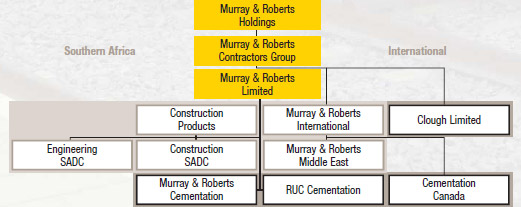
ORDER BOOK The significant loss of order book between November 2008 and March 2009 has been felt in the current financial year, where short term work to fill the void in some operations has just not been available. While we have managed to sustain a steady order book at about R40 billion over the past 15 months, winning more-or-less as much new work as we have been consuming, this has been in favour of our international operations, where markets have recovered faster and more robustly than in South Africa. The consequence is that Construction SADC has become stressed with lower than ideal order book development and we will certainly feel the impact in Construction Products SADC during the year ahead. LEADERSHIP, ORGANISATIONAL AND STATUTORY CHANGE Murray & Roberts has an ongoing succession & development program under the auspices of the remuneration & human resources committee that involves about 150 senior managers and executives across the Group. We have continued to streamline our statutory and organisational structure to offer increased efficiency and a more comprehensive link between responsibility and accountability. The following is the outline statutory and management structure that should be in place before the end of the 2010 calendar year.
Murray & Roberts may have a global reach and client base, but it is a South African company driven by South African dynamics. Its principal relationships are in South Africa, as are the majority of its employees. The mainly USA emerging market funds that currently hold 57% of Murray & Roberts shares are invested in the company because it is South African, not because it is global. PROSPECTS While disappointed with the need to recognise the Gautrain provision and its impact on our performance this financial year, it is a correct, prudent decision under the circumstances. Notwithstanding our rather cautious prospects statement last year, many of our companies delivered exceptional performance in some difficult markets, while there are a few whose market conditions prevented any form of performance. Overall, there is significant potential in the future profile of Murray & Roberts. To realise this potential we have to solve our current challenges as we develop our future plans. Overall, there is significant potential in the future profile of Murray & Roberts. To realise this potential we will have to solve our current challenges at the same time as we develop our future plans. We cannot undo the past. But we can and will recover what is rightfully ours through whatever process is feasible. We will rationalise what is not working in the current economic market and streamline our operations to suit the circumstances. We will build forward from whatever platform must result from these processes in this current year. Murray & Roberts has a clear strategy based on strong fundamental principles embodied in its purpose and its vision for the future. There is no reason why its successful actions in pursuit of this strategy through the past decade will not be capable of repetition through the decade ahead. This includes merger, acquisition, closure and disposal; new market development; and participation in major projects both locally and in the international domain. We have no limitation other than ourselves: the quality and capability of our leadership and people, the strength of our statement of financial position, and the selection of our partners. APPRECIATION I acknowledge the significant contribution of the great majority of our people who work every day within our operations, often under difficult conditions both in South Africa and elsewhere across the world where Murray & Roberts is present. We constantly strive to make this a better experience. I regret the consequence of our operations where people’s lives may have been changed through accident, injury or death. We constantly strive to make our workplace healthier and safer with minimal impact on society and the environment. I welcome the many new people who joined our Group in the year and wish you an exciting and rewarding career in Murray & Roberts. We constantly strive to improve our systems and procedures to meet the changing needs of our younger generation of leaders. I wish those who have left for a variety of reasons well in your new ventures. We constantly strive to make the Murray & Roberts experience one that will stay with you forever. I extend my deep appreciation to the Murray & Roberts leadership team across the full spectrum of our domestic and global operations. We constantly strive to recognise your considerable commitment and achievement in delivering the Murray & Roberts value proposition to your various stakeholders. I wish to thank the directors of Clough led by chairman Mike Harding for their work on behalf of the company and all its shareholders. Mike Harding will retire as chairman and as a director at the upcoming annual general meeting and will be succeeded as chairman by Keith Spence. Finally, I thank the directors of Murray & Roberts who, led by our chairman Roy Andersen, have upheld the highest levels of governance during the year. Brian Bruce
|
||||||||||||||||||||||||||||||||||||||||||||||||||||||||||||||||||||||||||||||||||||||||


© 2010 Murray & Roberts - All rights reserved. |